

Publication date:
Jan 22, 2025
IMF Data Brief: Financial Soundness Indicators and Coordinated Direct Investment Survey
January 8 – 22, 2025
Bank Profitability Increases Globally
Financial Soundness Indicators, Country Group Aggregates (Contributors: Mahmut Kutlukaya, Ibrahim Serwanja, Hector Carcel Villanova and Lamya Kejji)
Banking sector profitability, as measured by return on assets (ROA), has been on the rise since 2021 across most countries based on their reported financial soundness indicators (FSIs). As a group, Emerging Market and Developing Economies (EMDEs) exhibit higher bank profitability than Advanced Economies (AEs).
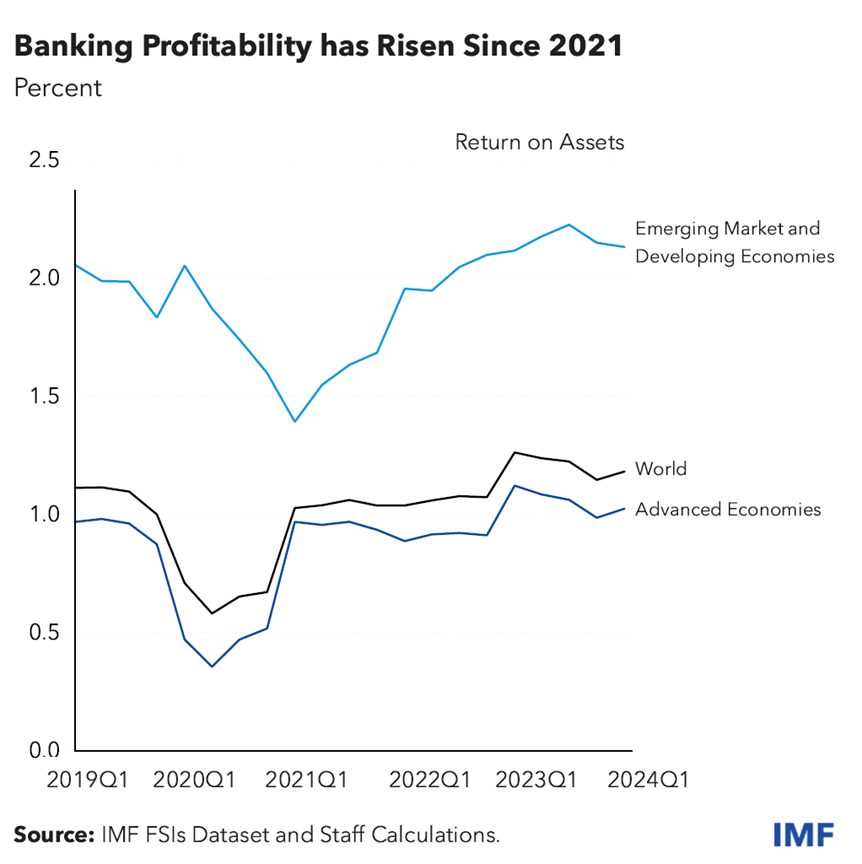
Notes: Data based on 28 AEs and 57 EMDEs. ROA is calculated as the ratio of net income before tax to total assets for a specific period. For country groups, the net income before tax and total assets from individual countries are converted into US dollars and then summed across the constituent countries. ROA calculation follows the methodology prescribed in the 2019 FSIs Compilation Guide: (i) Net income before tax is the annualized cumulative from the start of the calendar year to the end of the reporting quarter, (ii) Total assets are calculated as the average over the period during which the net profit is generated.
Rising interest rates, as monetary policy tightened across most countries, bolstered interest income of the banking sector. EMDE banks have higher ratios of interest income to total assets than AEs, even though the latter registered faster increases in these ratios from 2022. In particular, the median interest income to total assets ratio for AEs rose by over 3.0 percentage points (pp) between 2021 and 2024, compared to about 1.9 pp for EMDEs. In addition, higher profitability has been supported by a reduction in expenses for loan loss provisioning relative to total assets.
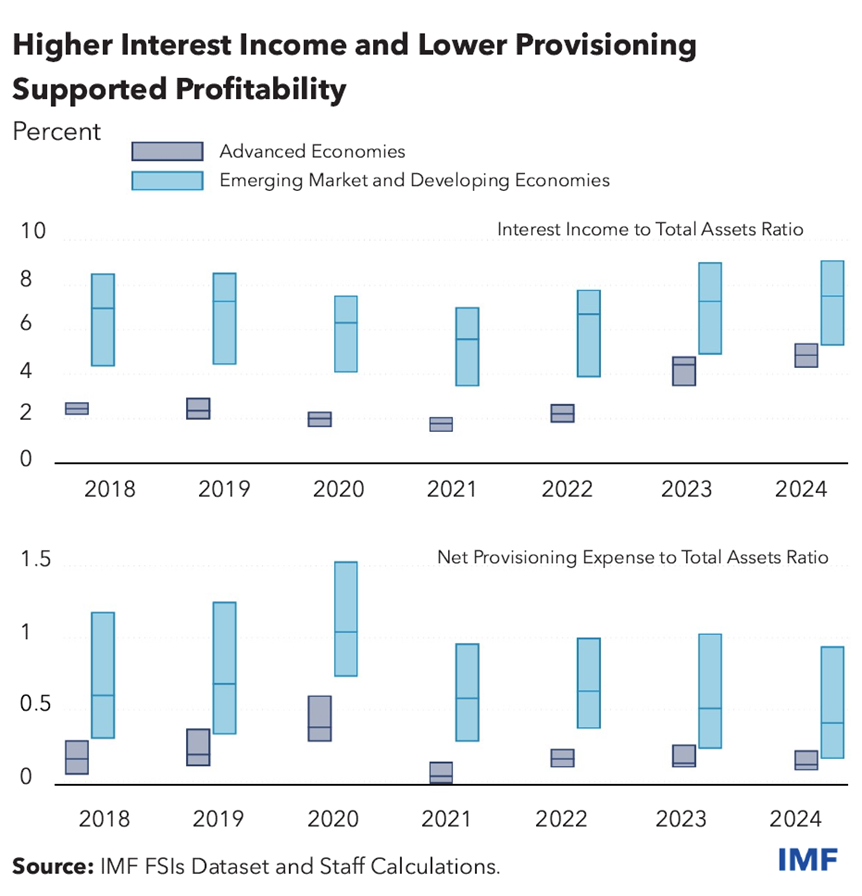
Notes: Key to graph: The boxes represent the interquartile range. The lines inside the boxes are the median.
Data based on 28 AEs and 57 EMDEs. Results are for the full year, except for 2024 for which results are annualized based on the most recent available cumulative quarterly data
Direct Investment Positions Across the World Increased by Around 4 Percent in 2023
Coordinated Direct Investment Survey, Country Data and Country Group Aggregates, December 2023
(Contributors: Mher Barseghyan, Maja Gavrilovic, Topias Leino and Abdulrahman Gweder)
Inward direct investment (DI) positions increased by USD 1,751 billion during 2023—a 4.4 percent increase, reaching USD 41,121 billion at the end of 2023, according to the most recent Coordinated Direct Investment Survey (CDIS) data. The largest increase was recorded in Singapore (by USD 307 billion, or a 15 percent increase over the country’s end-2022 position) and the United States (by USD 227 billion, or a 4.4 percent increase). At the same time, the positions decreased significantly in the Netherlands (by USD 282 billion, or a 9 percent decrease) and Germany (by USD 141 billion, or a 3.7 percent decrease). The world’s top five destinations for inward FDI by end-2023 (among countries that reported data during the current CDIS cycle) were the United States, the Netherlands, China, Luxembourg, and the United Kingdom. That list remained unchanged from 2022.
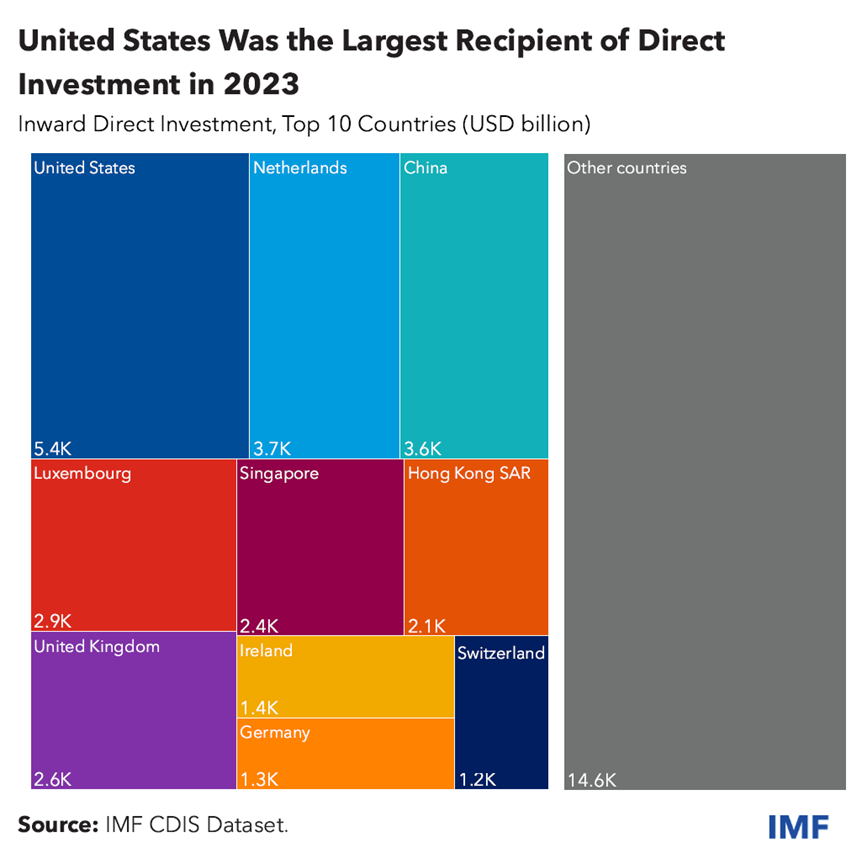
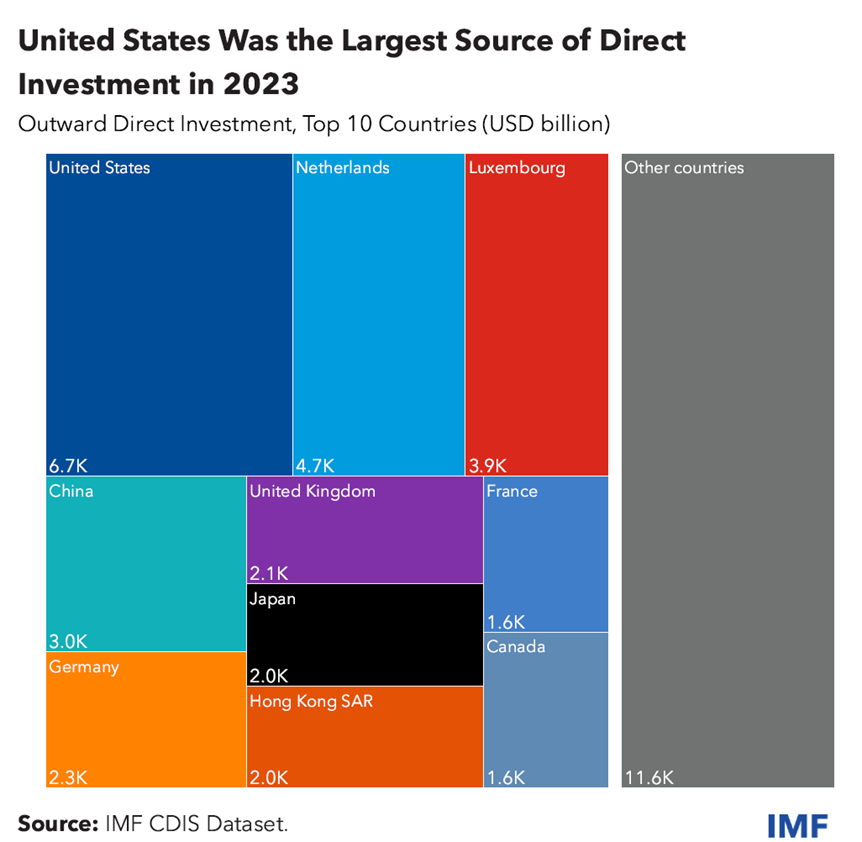
The average number of investing economies per DI recipient economy (based on all CDIS reporters’ data) increased from 94 in 2014 to 109 in 2023. Over the same period, the average concentration of investing economies (as measured by Herfindahl–Hirschman Index) in the recipient economies decreased from 0.40 to 0.39. These two measures suggest a slightly rising diversification of investments by country at the global level. It can be argued that this has contributed to making the host economies somewhat less vulnerable to sudden shocks in any specific investing economy. It should be noted, however, that the share of the largest 10 investing economies in the total direct investments of the recipient economy has remained almost unchanged in the past 10 years – 83 percent on average.
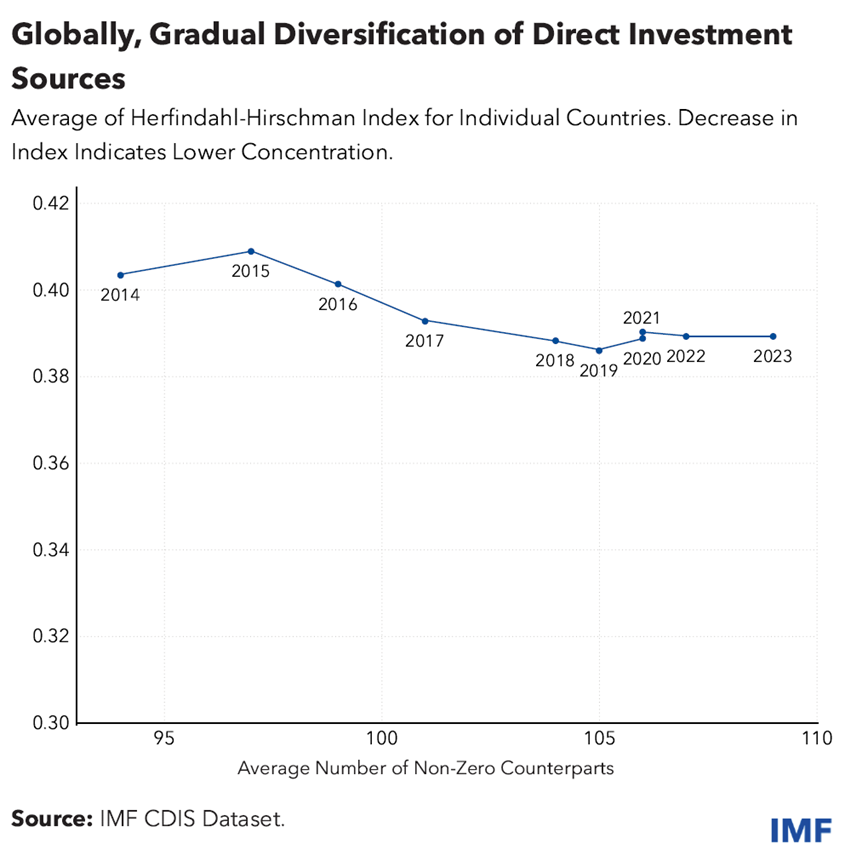
Notes: The CDIS is an annual worldwide survey of bilateral DI positions conducted by the IMF’s Statistics Department since 2009. The CDIS database presents detailed data and metadata on inward DI (i.e., direct investment into the reporting economy) and outward DI (i.e., direct investment abroad by the reporting economy). 109 countries provided data for the CDIS 2023 cycle. The CDIS 2023 is estimated to cover around 97 percent of the world’s direct investment based on reported International Investment Position data. The Herfindahl-Hirschman Index (HHI) evaluates the concentration of industries or sectors or in this case investing countries within an economy, where a higher HHI indicates a greater level of concentration. HHI for an individual economy was calculated by summing the squares of the shares of all investing counterpart economies. A simple average of HHI index from all reporting economies was used in the chart.
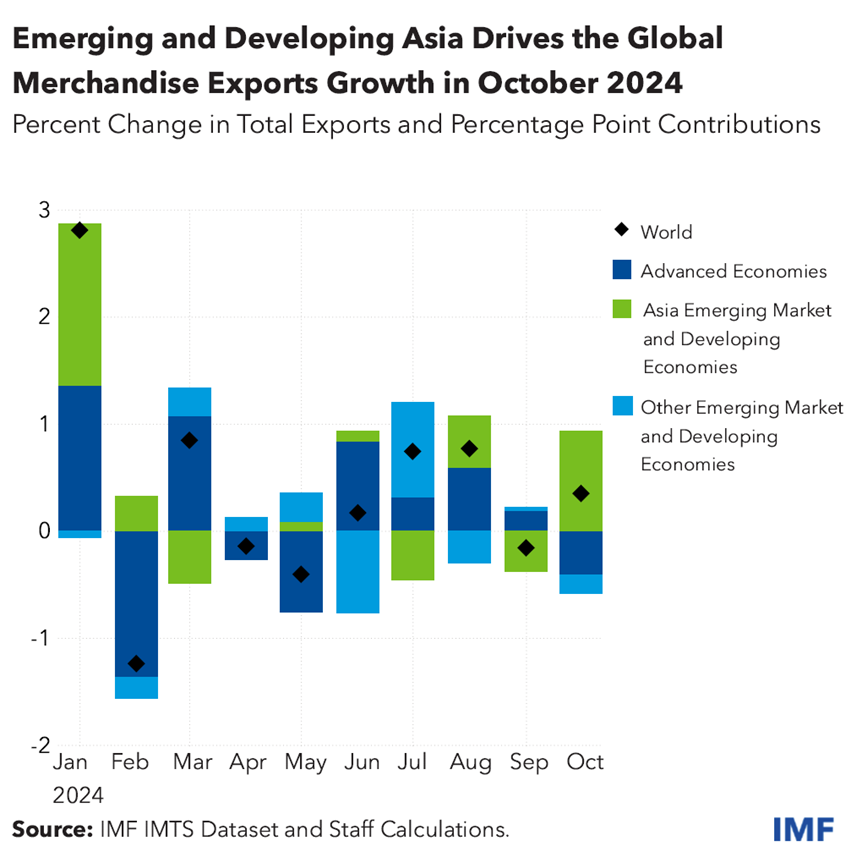
Global Merchandise Exports Increase in October 2024 Driven by Emerging and Developing AsiaInternational Merchandise Trade Statistics, Country Group Aggregates, October 2024
Notes: Seasonally adjusted world and country group aggregates are derived from a sample of 110 economies that report monthly merchandise exports to World Trade Organization/International Financial Statistics. OTHER RELEASES |
World Economic Outlook UpdateIMF World Economic Outlook, Country Data and Country Group Aggregates, January 2025 The World Economic Outlook (WEO) Update was released on January 17, 2025. The release is a survey of prospects and policies by the IMF staff, usually published twice a year, with updates in between. |
Atmospheric CO₂ ConcentrationsGlobal Aggregates, December 2024 Atmospheric CO₂ Concentrations for December 2024 were released on January 8, 2025. The IMF Climate Change Indicators Dashboard tracks monthly atmospheric carbon dioxide concentrations. |
EMPOWERING THE WORLD WITH DATA
IMF Data is known for its high standard of quality and methodological consistency. With over 50 datasets updated regularly, you always have access to the latest global economic trends and forecasts as well as trusted data for cross country research and analysis.
Check our release calendar for upcoming release
